Automated Component Kit Preparation Rate and recovery checklist
Test component kitting with missing, extra and wrong items, interrupted kits, refills and recipe changes. Record accepted kit output and controlled recovery.
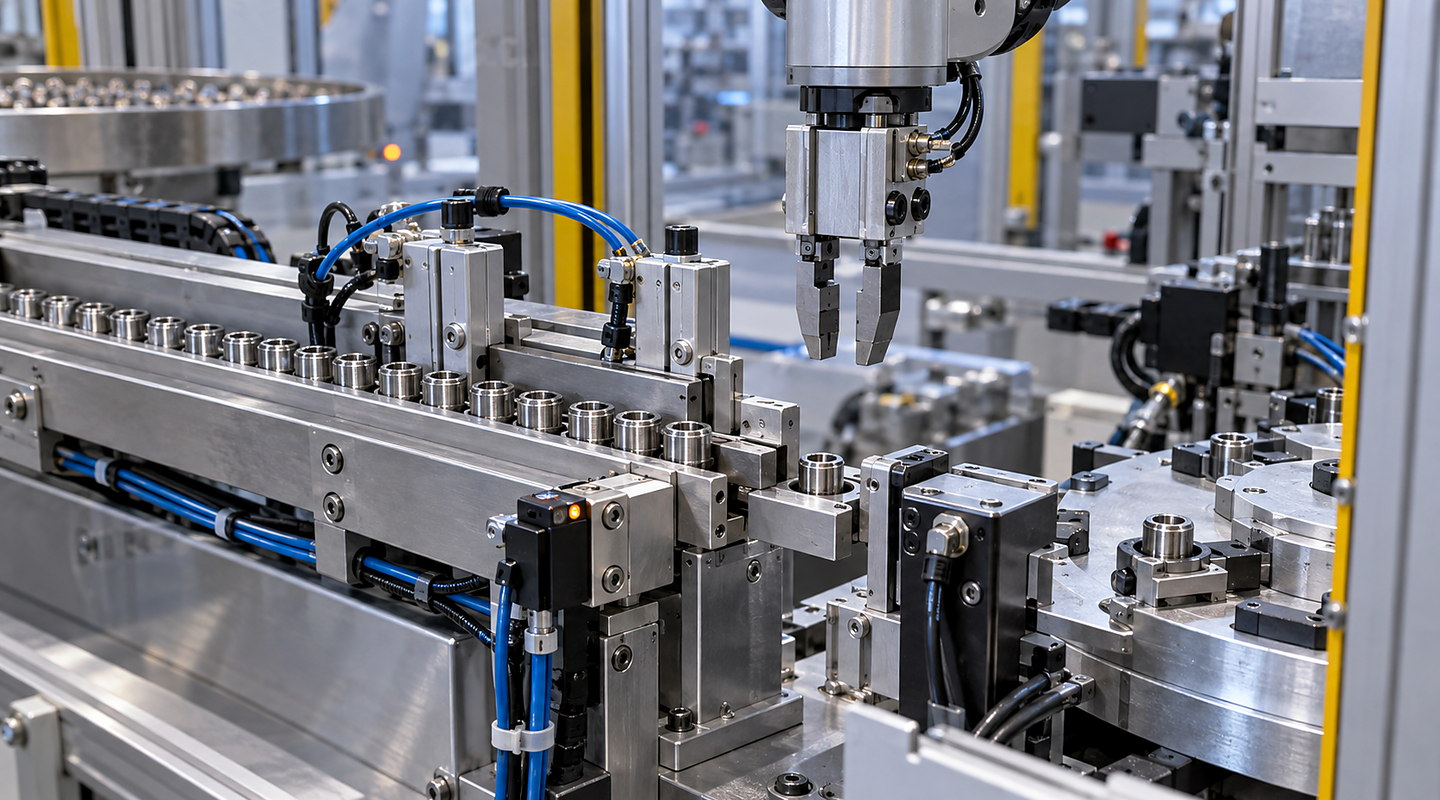
Photographs illustrate component feeding and transfer. Component identity, quantities and complete-kit release must be proved with representative parts and the intended receiving pack.
In brief
Agree the complete-kit recipe and expected result for each challenge before testing. Use representative parts and the intended receiving pack to test missing, extra and similar-looking wrong items. Include stopped cycles, empty supplies, refills, container changes and recipe changes; retain incomplete or uncertain kits for controlled recovery.
Turn your production information into clearer decisions — Automated Component Kit Preparation
Plan automated component kit preparation around real component variation, bulk condition, orientation, usable delivery rate and the downstream interface. Discuss representative part trials with Sorting Solutions. Use this guide to resolve jam, damage and recovery acceptance checks before it limits the final system.
Jam, Damage and Recovery Acceptance Checks: condition, range and effect on your process
Current condition
Record the kit recipe and revision, component references and quantities, receiving container or positions, expected result and observed checks. Include the supply state and any components already present when a cycle is interrupted.
Realistic range
Use normal, marginal and supplier-variant components in realistic bulk or tray conditions. Challenge missing, extra and similar-looking wrong items, an empty supply and refill, a partly built kit, container removal or replacement and a change between similar recipes.
Effect on the system
Record accepted, incomplete, reworked and uncertain kits separately. Check the downstream handover, the agreed hold or rework response and the recheck after recovery. Include refill, checking, recipe-change and recovery time when assessing complete-kit output.
Before you contact us
Five questions about jam, damage and recovery acceptance checks for your application
Who can confirm this information?Identify the person responsible for jam, damage and recovery acceptance checks in production, quality, engineering or operations.
How representative is the sample?Include age, supplier, batch, environment and upstream process state where they affect automated component kit preparation.
What is the difficult condition?Include the slow, reflective, flexible, dirty, damaged, marginal or uncommon case that your system must still handle.
How will you judge the result?Agree the method, repetitions, acceptable range, result record and the response if the observed result falls outside the agreed range.
What else must be coordinated?Your final automated component kit preparation scope must also account for escapement and downstream pick interface, jam, damage and recovery acceptance checks, current regulations and the conditions at your site.
Connected details
Review jam, damage and recovery acceptance checks as part of the complete system
Question 1
Component Geometry and Variation for Automated Component Kit Preparation
Approve the bill of materials and recipe revision, with component identifiers, quantities, permitted substitutions and receiving positions. Identify plausible missing, extra and wrong-item cases with an expected result for each.
Question 2
Surface, Fragility and Entanglement Behaviour
Trial actual part surfaces and fragile or entangling components. Retain observations of separation, orientation and damage, and record where an alternative presentation method is needed.
Question 3
Bulk Condition and Replenishment Method
Run representative supply levels, an empty feeder and replenishment. Account for components remaining in supplies and part-complete containers before a recipe change; record how uncertain supply or kit states are contained.
Question 4
Required Orientation and Delivery Rate
Measure accepted complete kits for the agreed product mix. Include refills, checking, recipe changes, rework and rejected kits, keeping individual feeder speed distinct from usable complete-kit delivery.
Question 5
Escapement and Downstream Pick Interface
Confirm the intended receiving pack and positions. Challenge container removal, replacement and an interrupted cycle; verify that the completion result stays associated with the correct kit and downstream handover.
Question 6
Jam, Damage and Recovery Acceptance Checks
Interrupt dispensing after some components are present, then demonstrate the agreed reconciliation and recovery without a duplicate fill. Test controlled rework and recheck; retain missing, extra, wrong-item and uncertain outcomes rather than treating them as accepted kits.